WYSAX is a school management solution designed to simplify and streamline various administrative tasks. It offers customizable solutions, intelligent timetable management, and efficient resource allocation based on constraints and preferences. Featu…
Pluralsight provides a comprehensive online learning solution for technology professionals seeking to enhance their technical skills and optimize workflows. The platform offers a diverse range of courses, learning paths, and certifications, backed b…
In the introduction, we explained the inadequacies of the traditional left-right line. single left-right axis
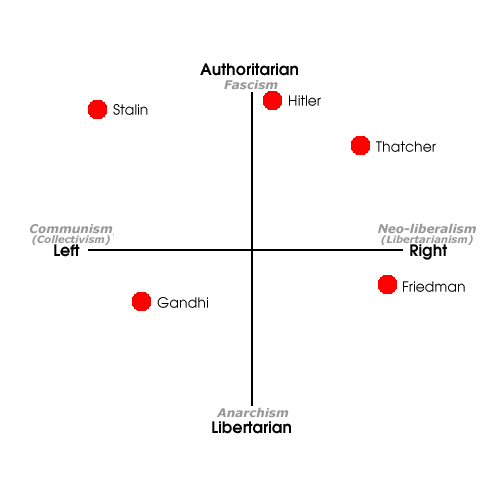
If we recognise that this is essentially an economic line it’s fine, as far as it goes. We can show, for example, Stalin, Mao Tse Tung and Pol Pot, with their commitment to a totally controlled economy, on the hard left. Socialists like Mahatma Gandhi and Robert Mugabe would occupy a less extreme leftist position. Margaret Thatcher would be well over to the right, but further right still would be someone like that ultimate free marketeer, General Pinochet.
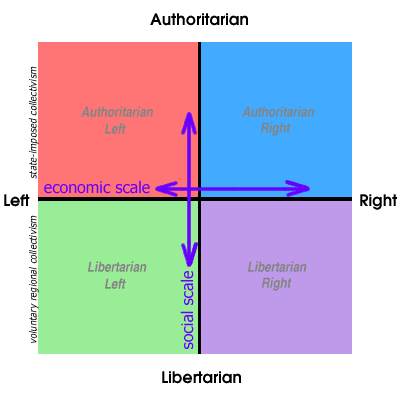
That deals with economics, but the social dimension is also important in politics. That’s the one that the mere left-right scale doesn’t adequately address. So we’ve added one, ranging in positions from extreme authoritarian to extreme libertarian. cartesian plane with horizontal left-right axis and vertical authoritarian-libertarian axis
Both an economic dimension and a social dimension are important factors for a proper political analysis. By adding the social dimension you can show that Stalin was an authoritarian leftist (ie the state is more important than the individual) and that Gandhi, believing in the supreme value of each individual, is a liberal leftist. While the former involves state-imposed arbitrary collectivism in the extreme top left, on the extreme bottom left is voluntary collectivism at regional level, with no state involved. Hundreds of such anarchist communities existed in Spain during the civil war period