We've compiled a list of 3 free and paid alternatives to checkSum+. The primary competitors include VWO Fullstack, dotCover. In addition to these, users also draw comparisons between checkSum+ and Hashtab. Also you can look at other similar options here: Development Software, Software Testing Tools.
We've compiled a list of 3 free and paid alternatives to checkSum+. The primary competitors include VWO Fullstack, dotCover. In addition to these, users also draw comparisons between checkSum+ and Hashtab. Also you can look at other similar options here: Development Software, Software Testing Tools.
Effortlessly trial and implement intricate features with VWO FullStack. It offers server-side adaptability for diverse experiments with in-depth segmentation, ensuring optimal performance and consistent user experiences across channels.
JetBrains dotCover is a powerful code coverage tool for .NET developers, seamlessly integrating with Visual Studio and JetBrains Rider. It calculates statement-level code coverage for applications targeting .NET Framework, .NET Core, Mono, or Mono f…
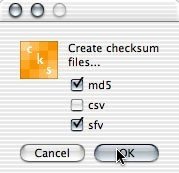
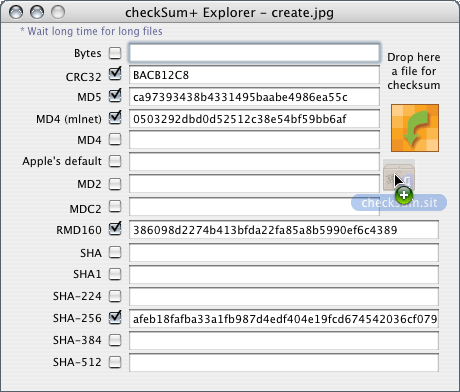
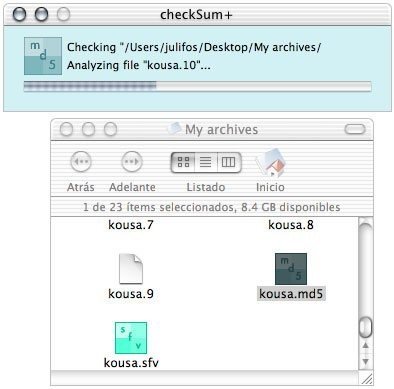
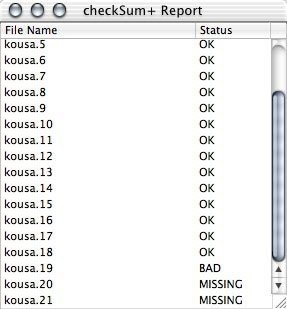
checkSum+ will handle md5, sfv & cvs files (please, do not confuse with cvs files, since these can be any kind of database file). These files store "checksum" information about files, and will allow this and other applications know if the related files are or not corrupted. You will find oftenly these files in USENET newsgroups and other places, where there is a risk of data loss. So, the original distributor of some files, usually *large* files, will create and also distribute some of these files, so the final recipient of such files can check for the integrity of these. This is very useful, eg, for multi-segment files. When you attempt to join them, if one of them is corrupted, the attempt will simply fail, and you won't know what segment is corrupted. But using these files (md5, sfv or cvs), you can know what is the bad file, and re-download it again, instead of re-downloading all the stuff.